by Jodi Samuels
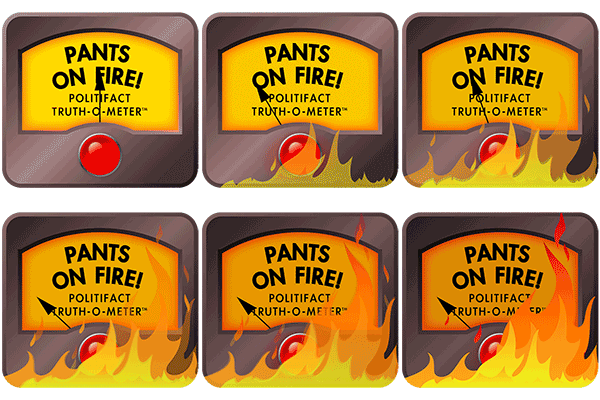
Fake news has been synonymous with media for the recent years that its liberal usage has made it own impact. Its mark has been lasting, if not damaging. The challenge now is how to traverse across the various social media and how to discern between fake news and real news.
CBS News reported that people are not so much influenced by the almighty algorithm on their social media feeds but by their own worldview. Let’s face the reality that people are willing to subscribe to news that fits their own personal narrative. Validation is based more on fiction or some truths versus fact. So liberals will see liberal news and conservatives will see conservative news.
The NeimanLab reported on “rumor cascades” that began with a few individuals or organizations on Twitter that would then go viral through retweeting. The message is not necessarily “fake” but have some true mixed in. The reason again why fake news travel so fast or become viral is the sense of “novelty”. Novelty and emotion tend to be hard drivers because its more noteworthy. On a list of then topics from the various news organizations the two out of that ten may catch fire simply because it is offering new or different information – not necessarily true.
So its not the algorithm that’s spreading fake news- people are. Big tech still does share responsibility in news information. Public service should be at the forefront without garnering the fear of censorship. There still need to be more fact checkers engaged with the content circulating on their feeds, transparency, and stronger policy to fight misinformation without propagating reactionary news.
 Beyond the Fold: Think Something New